OpenClaw Sub-Agent Breakthrough: Division of Labor, Efficiency, and Memory
In a nutshell: Task dispatch by type, efficiency through parallelism, memory through isolation.
Best for: OpenClaw users whose main Agent handles many tasks, whose main session often stalls, or whose context gets mixed up.
1. Three Main Pain Points of the Main Agent
| Pain Point | Manifestation |
|---|---|
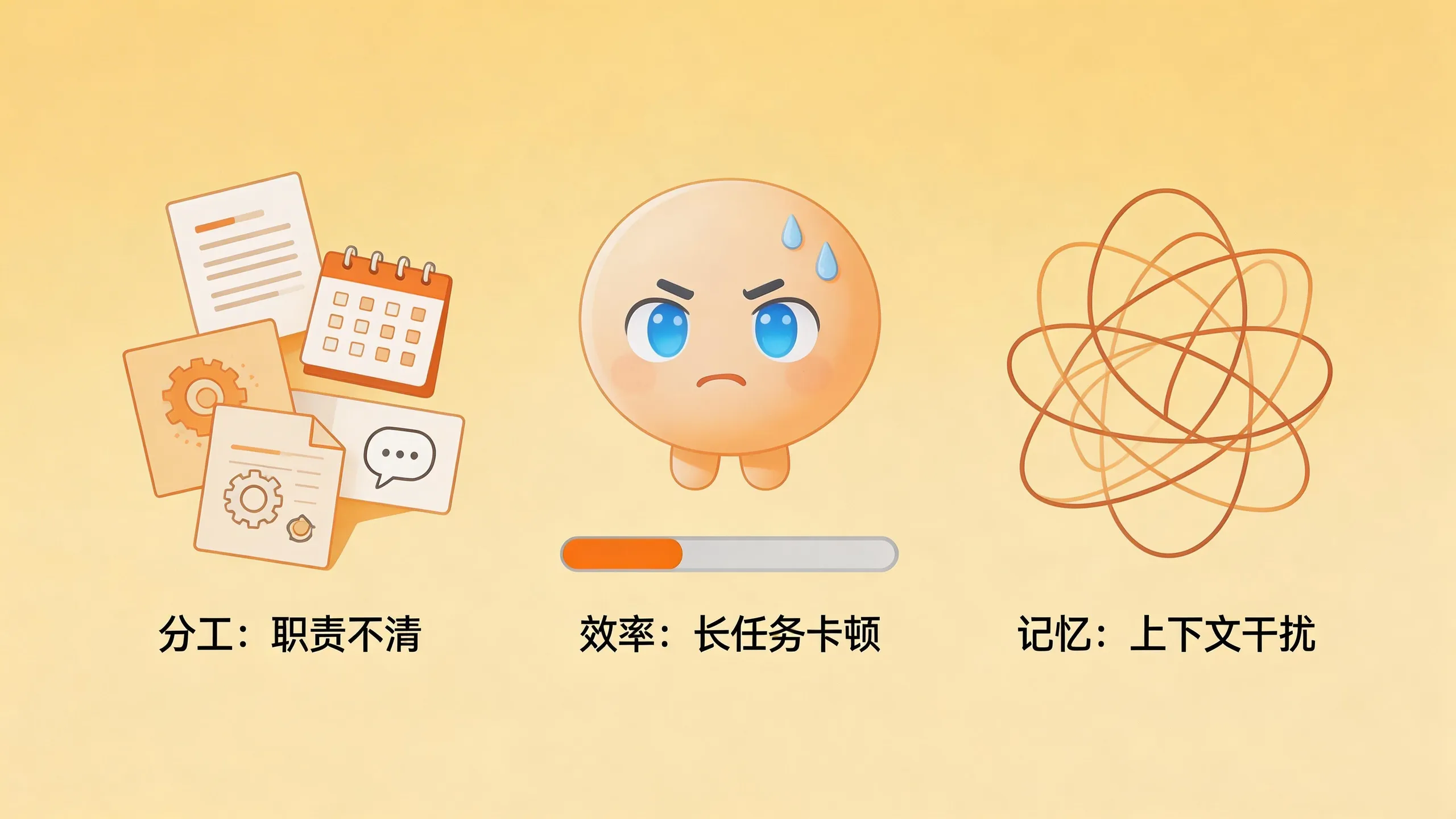
| Division of Labor | Bidding, enterprise, policy, and more all crammed together with unclear responsibilities |
| Efficiency | Long tasks stall, main session waits; one must finish before the next can start |
| Memory | All tasks share one session; contexts interfere and are hard to trace |
2. How Sub-Agents Break Through
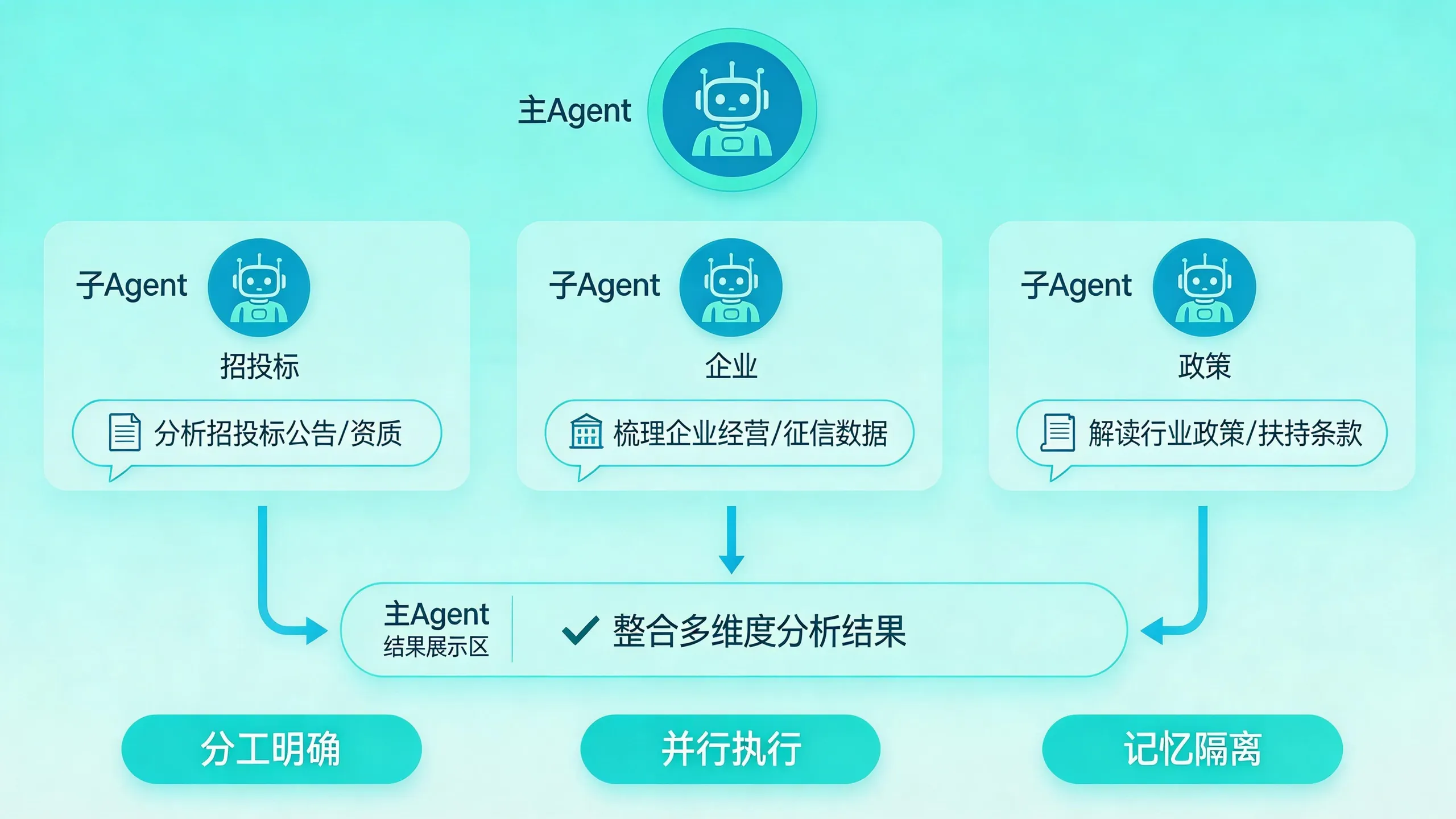
In OpenClaw, the main Agent delegates heavy work to Sub-Agents, and the main session gets immediate feedback. Sub-tasks return summaries when done. Sub-Agents can use cheaper models to save cost.
| Breakthrough | Approach |
|---|---|
| Division of Labor | Dispatch by type (bidding, enterprise, policy, etc.); each Sub-Agent has a clear role; main Agent orchestrates and aggregates |
| Efficiency | Long tasks run in sub-sessions; main session responds in seconds; supports parallel execution |
| Memory | Each sub-task has its own session; no interference; easy to trace |
3. When to Use Sub-Agents?
| Better with Sub-Agents | Consider Single Agent + Skills |
|---|---|
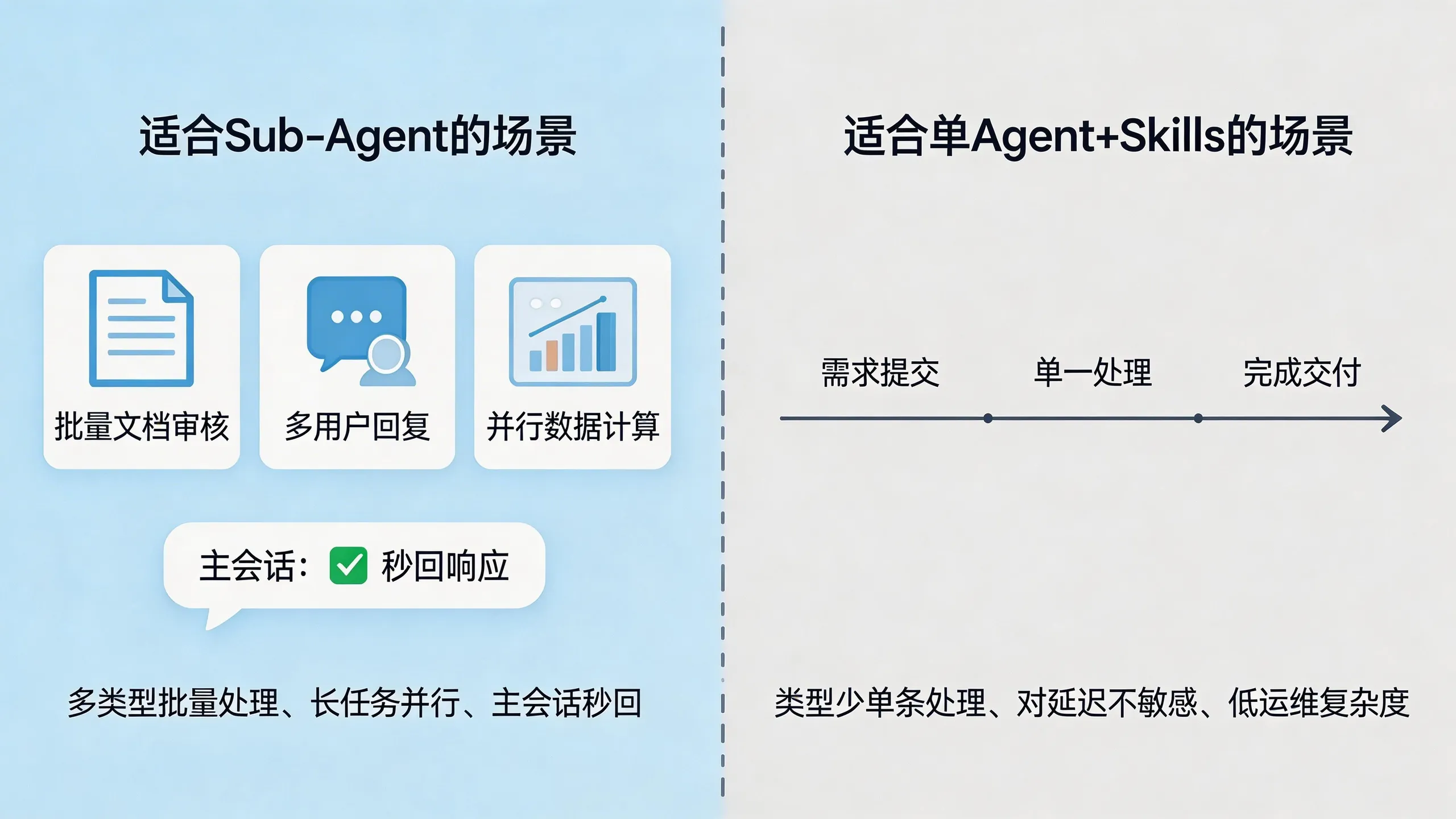
| Multiple types, batch processing, main session needs fast response | Few types, single-item processing, latency not critical |
| Long tasks, need parallelism, want to avoid memory confusion | Prefer lower operational complexity |
| Main model for orchestration, cheaper models for sub-tasks | Validate workflow first, then split into Sub-Agents |
4. Relationship Between Sub-Agents and Skills
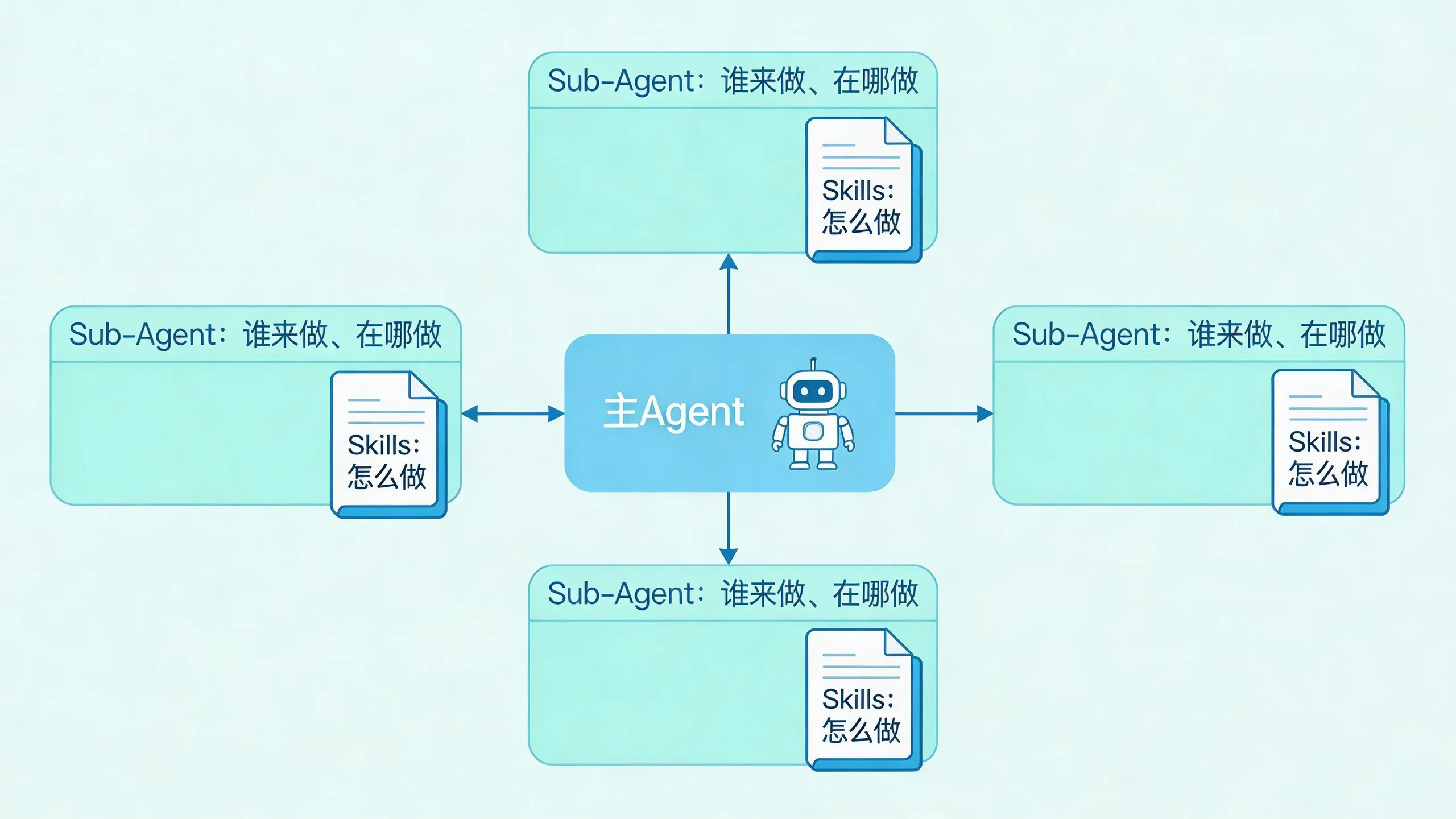
- Sub-Agent: Handles "who does it, where" — independent sessions, parallel execution, isolated context
- Skills: Handles "how to do it" — teaches the Agent when and how to use tools and workflows
Complementary: Both the main Agent and Sub-Agents can use Skills; the main Agent dispatches and aggregates, Sub-Agents execute specific logic via Skills.